What Is a Downspout Extension?
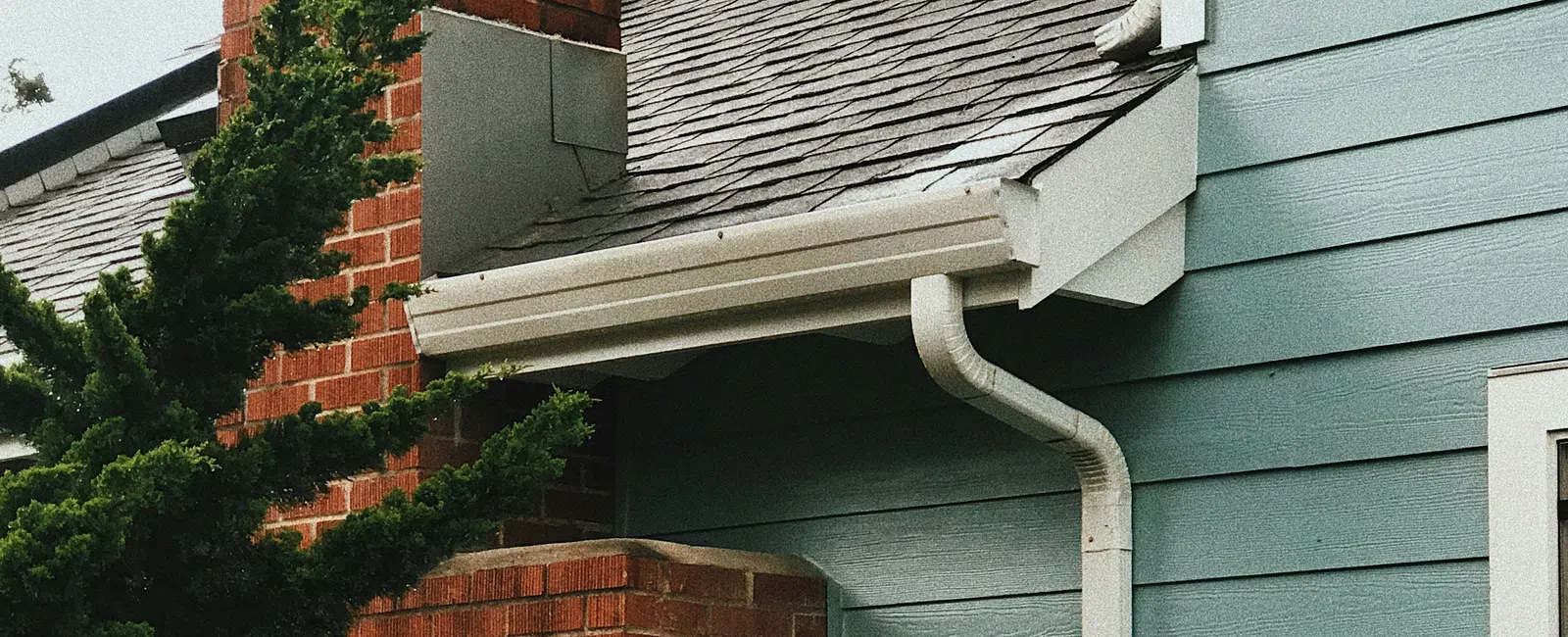
Your gutters catch rainwater and funnel it to the downspouts, the vertical pipes running down the corners of your home. A downspout extension (sometimes called a downspout extender or gutter extension) attaches to the bottom of that pipe and carries water farther away from your house before releasing it.
Without one, water exits the gutter downspout and dumps straight onto the soil beside your foundation. With one, the same water travels several feet out, where it can drain safely rather than pooling against your home.
How Short Downspouts Put Your Foundation at Risk
When water collects against your foundation, it does not just sit there politely. It causes a chain reaction.
- Foundation cracks and settling. Saturated soil expands and contracts, especially the clay-heavy soil common across North Georgia. That movement pushes against your foundation and can lead to cracks over time.
- Basement and crawl space moisture. Pooled water finds its way inside, bringing dampness, mold, and musty odors with it.
- Soil erosion. Repeated gushing water washes away the soil and landscaping around your home, undermining the ground that supports it.
- Pest problems. Standing water near the foundation is an open invitation for mosquitoes, termites, and other unwelcome guests.
Repairing a damaged foundation can cost thousands, but a proper gutter extension costs a tiny fraction of that.
Signs You Need a Downspout Extension
Not sure if your home is at risk? Walk the perimeter after the next rain and look for these clues:
- Puddles or soggy spots right beside the foundation
- Water stains or dampness in the basement or crawl space
- Eroded soil, mulch washed away, or exposed roots near downspouts
- Downspouts that end abruptly with no extension or splash block
- Mildew or watermarks creeping up the lower siding
Spot any of these? Your downspouts are likely releasing water too close to home.
Types of Downspout Extensions
The good news is that you have options, and the best downspout extension for your home depends on your yard, landscaping, and how much water you manage.
Flexible extensions. These accordion-style tubes bend around corners and obstacles. They are affordable and easy to reposition, though they are best for lighter-duty situations.
Rigid aluminum or vinyl extensions. These match your existing gutters for a clean, built-in look and reliably move water. They are a popular choice for a permanent, tidy finish.
Roll-out and decorative extenders. Some pop out only when it rains, then roll back up so they stay out of the way of your mower and foot traffic.
Splash blocks. A simple sloped block placed under the downspout that nudges water away from the foundation. Helpful, but usually best paired with an actual extension for longer distances.
Underground downspout systems. For the cleanest look and the best long-term protection, an underground downspout carries water through a buried pipe to a discharge point well away from the house. No tubes across the lawn, no tripping hazards, just water routed where it belongs. This is where professional drainage solutions really shine.
Whichever style you choose, a quick word on upkeep: extensions only work when they stay clear. Flexible tubes can collect leaves and grit, and buried pipes can clog over time if debris sneaks past the gutters. Pairing your extensions with clean, well-maintained gutter and drainage solutions keeps the whole system flowing the way it should, especially heading into our wet spring and summer storm season.
How Far Should a Downspout Extend?
A good rule of thumb: aim to move water at least four to six feet away from your foundation, and farther if your yard slopes back toward the house. The goal is to release water where the ground carries it away from your home, not toward it.
Direction matters too. Always discharge downhill and away from your foundation, your neighbor's property, and any low spots that already struggle to drain. Getting the grade and placement right is exactly the kind of detail that separates a quick patch from a real solution.
DIY or Call a Professional?
A basic flexible extender is something many homeowners can clip on themselves, and that is a fine short-term move. But if you are dealing with chronic pooling, a sloped yard, or you want a clean underground system, this is worth doing properly.
A professional can assess how your entire gutter and drainage system works together, then design extensions and grading that actually solve the problem rather than just shifting it a few feet. If your gutters are also showing their age, learn the signs your gutters need repair before water backs up, and find out what every homeowner should know before a gutter installation so the whole system works together.
Protect Your Foundation With Forsyth Exteriors
A downspout extension is a small upgrade with an outsized payoff. It keeps water away from your foundation, protects your basement and landscaping, and helps your home stand strong through every Georgia downpour.
At Forsyth Exteriors, we design complete gutter and drainage solutions for homeowners across Cumming and the greater Atlanta area, from seamless gutters to properly routed downspouts and extensions, and underground systems built for our climate.
Worried about where your rainwater is going? Call us today or schedule your free consultation, and we will make sure every drop ends up exactly where it should.