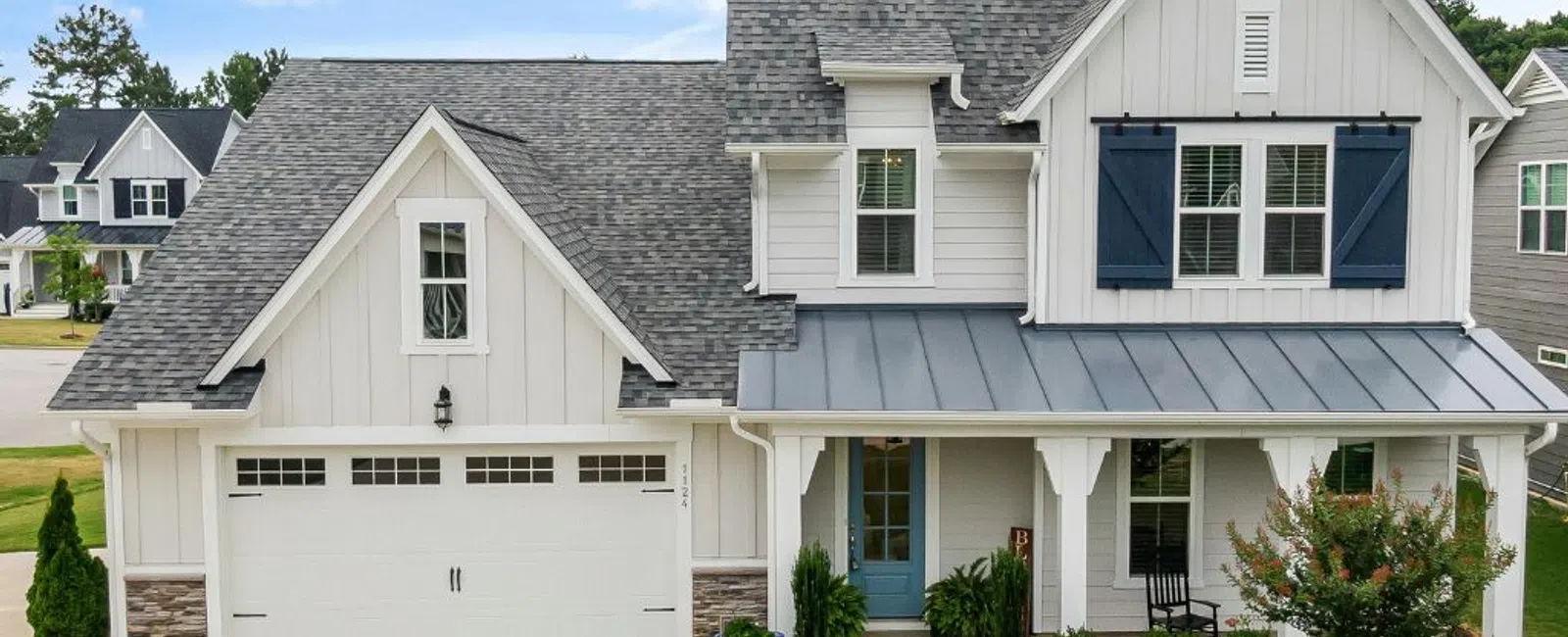
What Is Board and Batten Siding?
Board-and-batten siding is a vertical siding style made of two parts. Wide boards run up and down the wall, and then narrow strips called battens cover the seams where those boards meet. The result is a clean, rhythmic pattern that adds height and a little farmhouse charm to almost any home.
The style is not new. It started centuries ago as a practical way to seal barns and outbuildings against the weather using simple lumber. Today, the same look has jumped from the barn to the front porch, and it shows up everywhere from modern builds to classic Craftsman remodels.
You may also hear about reverse board-and-batten siding. Instead of the battens sitting on top, the narrow strips go down first, and the wider boards sit over them. It creates deeper shadow lines and a slightly more rustic feel. It is a small twist, but it is worth knowing the difference when you are picking your look.
Why Homeowners Love the Board and Batten Look
- It draws the eye up. Those vertical lines make a home feel taller and more substantial, which is great for ranch-style houses and single-story homes.
- It mixes beautifully. Many homeowners use board-and-batten on gables, dormers, or the front facade while keeping horizontal lap siding elsewhere. That contrast adds real curb appeal.
- It works with any color. Crisp white, deep charcoal, sage green, you name it. The texture does a lot of the heavy lifting.
You no longer have to choose between this timeless look and a low-maintenance home. Modern materials give you both.
Board and Batten Siding Material Options
The same vertical style is available in several materials, and each one behaves a little differently in Georgia's heat, humidity, and summer storms.
Vinyl Board and Batten Siding
Vinyl is the budget-friendly favorite, and for good reason. Board-and-batten vinyl siding gives you that vertical farmhouse look without the upkeep of real wood. It resists moisture, never needs painting, and holds up well to the daily wear of a busy household.
It is a smart pick if you want the style at the most approachable price point. The trade-off is that vinyl can look a touch less dimensional than premium materials up close, though today's panels have come a long way in mimicking real wood grain.
Fiber Cement (James Hardie) Board and Batten
If you want the upscale version, fiber cement is hard to beat. James Hardie offers a board-and-batten product that delivers deep, authentic shadow lines and a finish that genuinely looks like painted wood.
Fiber cement is also tough. It resists rot, pests, and fire, and it stands up to Georgia humidity better than almost anything on the market. We install a lot of it for a reason. If you want to go deeper on this material, our guide to HardiePlank siding covers it in detail.
Engineered Wood Board and Batten
Engineered wood, like LP SmartSide, is the middle ground a lot of homeowners land on. It is made from wood strands bonded with resins and treated to resist moisture and termites, so you get the warmth of real wood with far less worry.
It is lighter than fiber cement, often quicker to install, and takes paint beautifully. For homeowners who love a natural wood feel but do not want the maintenance headaches, engineered wood board-and-batten is a great fit.
Metal Board and Batten Siding
Want something with a modern, architectural edge? Metal board-and-batten siding has surged in popularity for contemporary and modern farmhouse designs. Usually made from steel or aluminum, it offers crisp lines, serious durability, and excellent resistance to fire and pests.
Metal panels also shrug off Georgia storms and require very little upkeep. The look leans sleek rather than cozy, so it pairs well with black windows and minimalist exteriors.
Traditional Wood Board and Batten
For the purist, there is nothing quite like the real thing. Wood board-and-batten siding, often made of cedar or pine, gives you authentic texture and the option to stain or paint it exactly how you like.
Just know that natural wood asks the most of you. In our climate, it needs regular sealing and repainting to fend off moisture and rot. It is beautiful, but it is a commitment.
How to Choose the Right Material for Your Home
When homeowners ask us which one to pick, we point them to four questions:
- What is your budget? Vinyl is the most affordable, with engineered wood, metal, and fiber cement following.
- How much maintenance do you want? Vinyl and metal are nearly hands-off. Real wood needs the most attention.
- What look are you after? Cozy farmhouse, sleek modern, or upscale traditional all point to different materials.
- How does it hold up here? Georgia's heat and humidity reward materials like fiber cement, engineered wood, and metal that resist moisture and pests.
Still torn between options? Comparing vinyl, wood, and metal siding side by side can make the choice clearer. And if your current siding is already showing its age, watch for these signs that it needs repair before you plan an upgrade.
Ready to Bring Board-and-Batten Home?
Board-and-batten siding is one of those rare updates that feel both timeless and fresh, and with today's materials, you can get the look in a version that fits your budget and lifestyle. The key is matching the right material to your home, your style, and our Georgia climate.
That is exactly where our team comes in. At Forsyth Exteriors, we install vinyl, fiber cement, engineered wood, and metal siding for homeowners across Cumming and the greater Atlanta area, and we are happy to help you find the perfect fit.
Ready to see what board-and-batten could do for your curb appeal? Schedule your free consultation or call us today, and let's talk through your options.