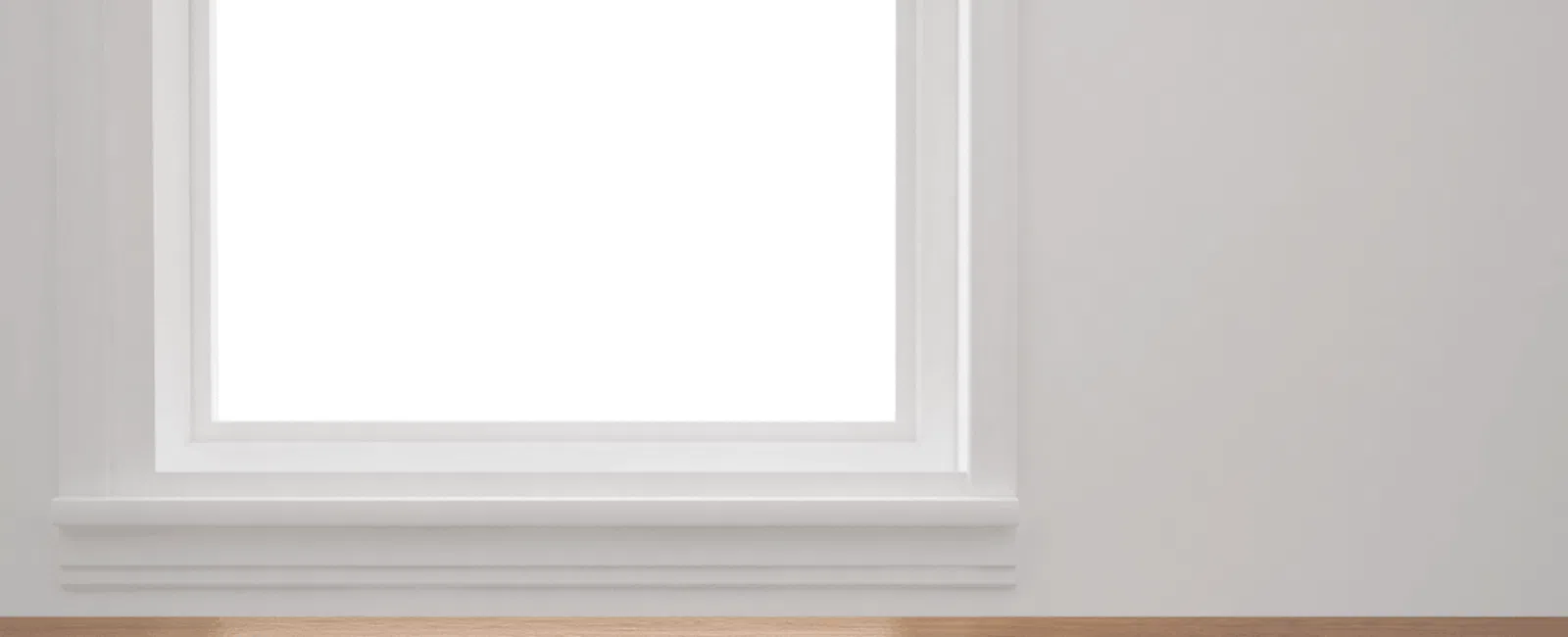
A picture window is a single fixed pane of glass glazed directly into a frame, with no sashes, tracks, cranks, or locks. Because nothing moves, the frame stays narrow and the glass fills more of the opening than any operable window of the same size. The trade is simple: the most view and daylight a wall can hold, in exchange for zero ventilation.
How A Picture Window Differs From Operable Styles
A double-hung window carries two sash frames inside the main frame, each with its own weatherstripping and balance hardware. A casement adds hinges, a crank operator, and a locking rail. Every one of those layers takes an inch or two of frame width away from the glass. A picture window has one insulated glass unit set into one frame, so a 60 by 48 inch opening shows noticeably more glass than the same opening filled with a double-hung.
The lack of moving parts also changes how the window ages. There is no weatherstripping to compress, no sash meeting rail to warp, and no balance springs to fail. Air infiltration happens only at the perimeter seal between frame and rough opening, which makes a well-installed picture window the tightest style available. The downside is that the glass on an upper floor has to be cleaned from outside, and there is no screen because there is no opening.
How the three styles compare on the points that matter most:
- Ventilation: a picture window offers none, a double-hung vents at the top and bottom sash, and a casement swings the full sash open
- Visible glass: largest in a picture window, medium in a casement, smallest in a double-hung
- Moving parts: none in a picture window, sashes and balances and locks in a double-hung, hinges and a crank and a lock rail in a casement
- Air seal: perimeter only on a picture window, sash tracks and meeting rail on a double-hung, a compression seal on a casement
- Bedroom egress: a picture window does not qualify, while a double-hung or casement qualifies if it meets the opening size
Where Picture Windows Work Best
Picture windows belong in rooms where the view or the light matters more than airflow, and where ventilation is already handled by another window or an HVAC return. Living rooms facing a wooded lot, two-story foyers, stair landings, dining rooms, and the gable end of a great room are the usual spots. A fixed pane above a kitchen sink pairs well with a a casement beside it, since the casement provides the airflow and the picture window provides the view.
Bedrooms need a second look. The International Residential Code, which Georgia adopts with state amendments, requires every sleeping room to have an emergency escape and rescue opening. A fixed pane does not count, so a bedroom can have a picture window only if an operable window or door in the same room meets the egress opening size.
Glass location matters too. When a pane is larger than nine square feet, its bottom edge sits less than 18 inches off the floor, and there is a walking surface within 36 inches, the code treats it as a hazardous location and requires tempered or laminated safety glass. Large floor-level picture windows in living rooms almost always trigger this rule.
North Georgia sun is the last consideration. A large fixed pane on a west wall takes direct afternoon heat from late spring through September. A low-E coating on the glass, a porch roof overhang, or mature tree shade keeps that room comfortable. North and east exposures rarely need the extra attention.
Pairing A Picture Window With Flankers
A common configuration is a picture window in the center with operable units on each side, called flankers. The units are joined into one assembly, either at the factory or on site, and installed as a single window. The three standard combinations are:
- A picture window with double-hung flankers, the traditional look for brick and fiber cement homes
- A picture window with casement flankers, which crank open to catch a cross breeze and seal tighter when closed
- A picture window over an awning window, where the top-hinged awning below vents even during a rain shower
Flankers give a room the airflow a fixed pane cannot, and the center pane still carries most of the light. Frame color, grille pattern, and glass coating should match across all units so the assembly reads as one window from the curb.
What Picture Window Installation Involves
A picture window is the heaviest window in the house per opening. A 72 by 60 inch insulated unit with two panes of quarter-inch glass weighs well over 150 pounds, so two installers, glass suction cups, and a clear path from truck to opening are standard. A replacement window installation for a fixed unit generally runs in this order:
- Measure the existing opening at three points in each direction and confirm the header above it is sized for the span.
- Remove the old unit, interior stops, and any deteriorated sill material, then check the rough opening for square, level, and hidden rot.
- Install a sloped sill pan, set the new unit, shim it plumb at the jambs, and fasten through the frame or nailing fin.
- Apply flashing tape in shingle fashion over the fin, seal the exterior perimeter, and fill the interior gap with low-expansion foam before trimming.
Step three is where picture windows differ from operable styles. Because there is no sash to test, fit is confirmed by measuring the reveal on all four sides and checking the frame for bow with a straightedge. A frame that bows even slightly under the glass weight will stress the glazing seal and shorten the life of the insulated unit.
Signs An Existing Picture Window Needs Replacement
With no hardware to wear out, the failures on a picture window show up in the glass and the frame. Fog or moisture trapped between the panes means the spacer seal has failed and the argon fill is gone, which cuts insulating value in half. A hairline crack at a corner usually traces back to frame movement or thermal stress on a west exposure. A soft spot on the interior sill, peeling paint at the bottom corners, or a draft along the perimeter caulk line points to water getting behind the frame. Any of these on a unit past the 20-year mark usually calls for a new window rather than a repair.
Forsyth Exteriors installs picture windows along with single-hung, double-hung, casement, and awning windows for homes in Cumming, Alpharetta, Sandy Springs, and across Forsyth County. The state-licensed team has handled window installation and replacement since 1993, with attention to proper fit and secure sealing on every unit. Schedule a consultation to see how a picture window would fit a specific room.